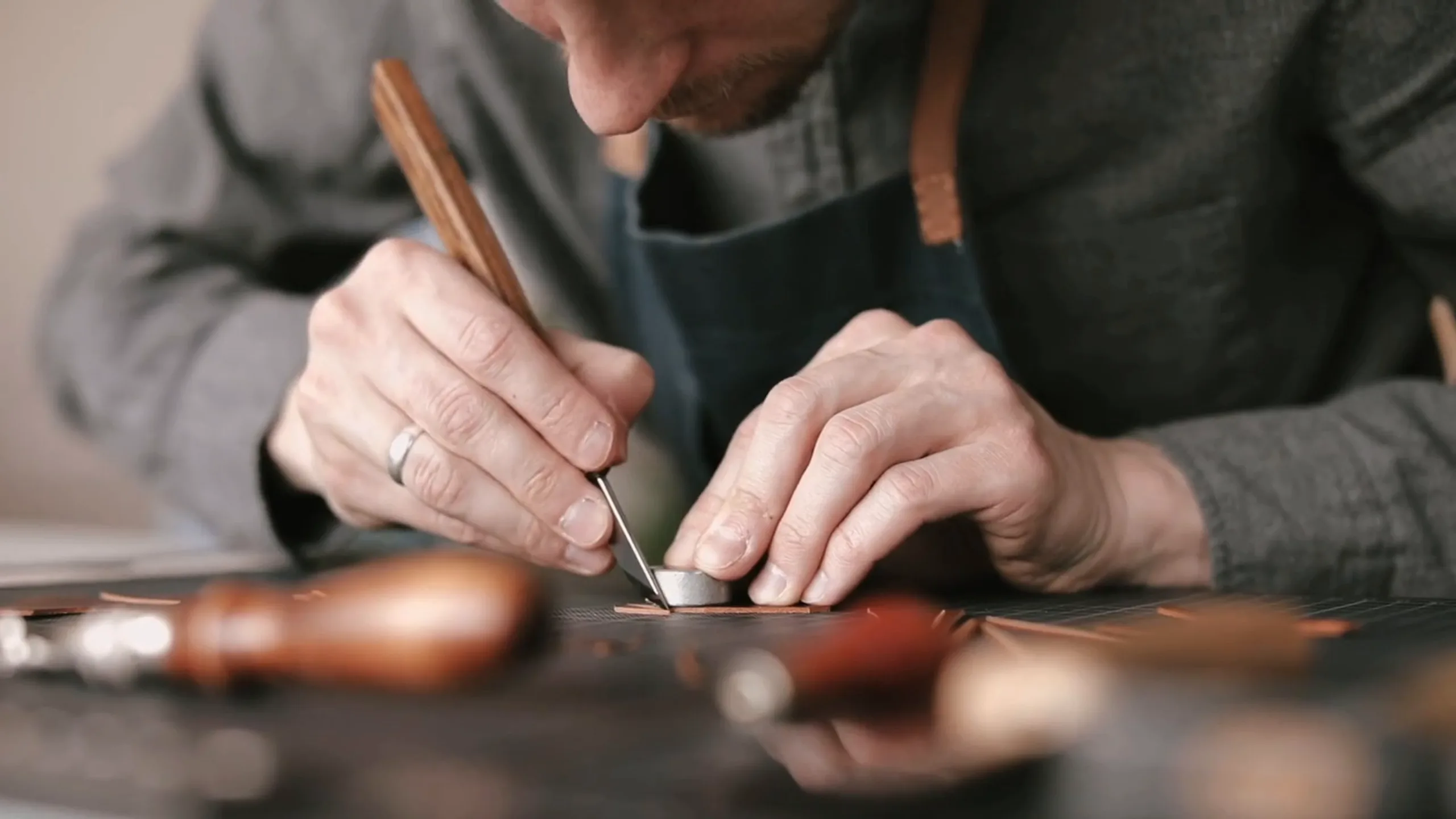
Stitched by hand.
Belts, dog leads and bag straps in English bridle leather, made to a length you give us.
Order a strapCut along the backbone.
A strap comes out of the firm part of the butt, parallel to the spine, because that is the only run of a hide that will not stretch under a buckle.
- Whole butts, never sides
- Cut along the backbone
- One length, no joins
The leather is the whole cost.
Bridle butt sits in oak bark pits for over a year, then is stuffed with tallow and wax until it will take rain without swelling. Everything after that is labour.
14 monthsin the pits before a hide is bridle leather
Two needles, one thread.
A saddle stitch passes both needles through the same hole from opposite sides. Cut one stitch and the rest hold, which is not true of anything sewn on a machine.
- Marked with a pricking iron
- Both needles, every hole
- Waxed linen, not nylon
The edge is the tell.
Bevelled, sanded, dyed and then burnished with friction until it is hard and glassy. A raw edge drinks water and the strap dies from the outside in.
About twenty minutes a strap, and no machine can do it
Send it back whenever.
Everything is made to be taken apart. Restitching, a new edge and a re-wax cost the postage, for as long as we are here and probably longer.
20 yearsbefore a billet wears through at the hole you use
Order a strapHow to tell hand work from the other kind.
None of this is visible in a marketplace photograph, and all of it is visible on the thing in your hand. It applies to anybody's work, not only ours.
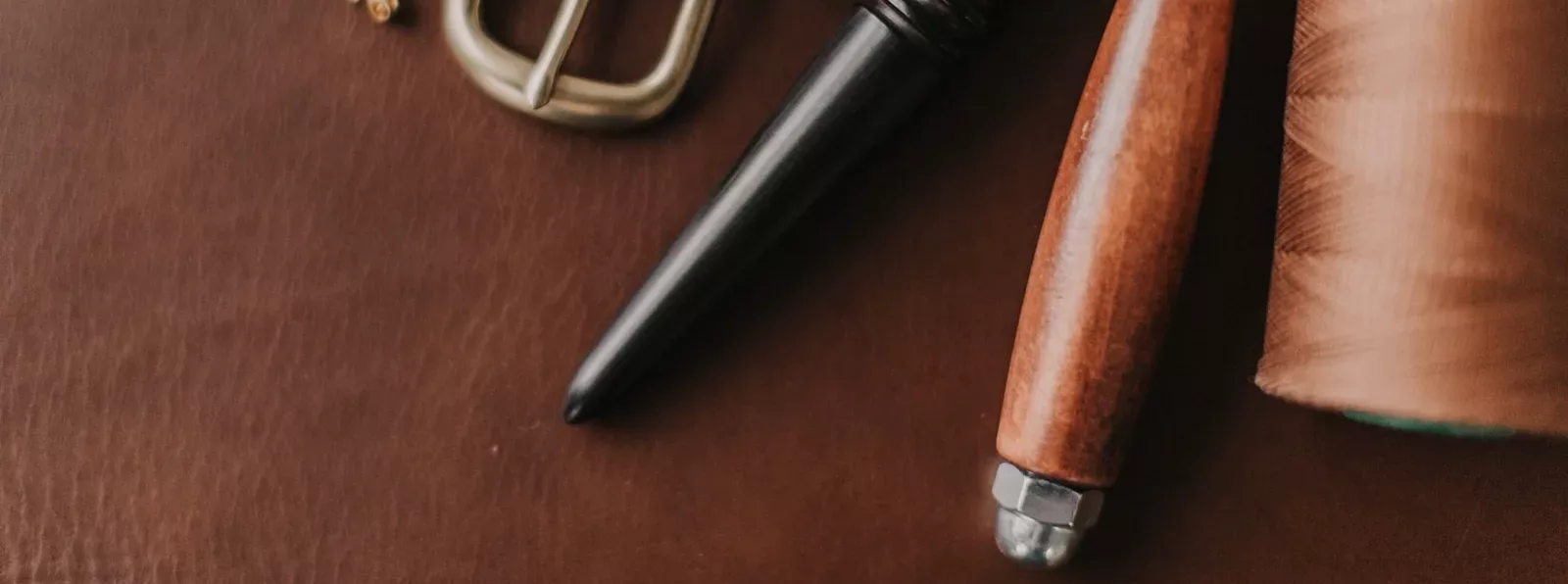
The stitch leans
Hand stitching sits at an angle, because the two needles come through from opposite sides. A machine stitch is square to the edge and identical every time.
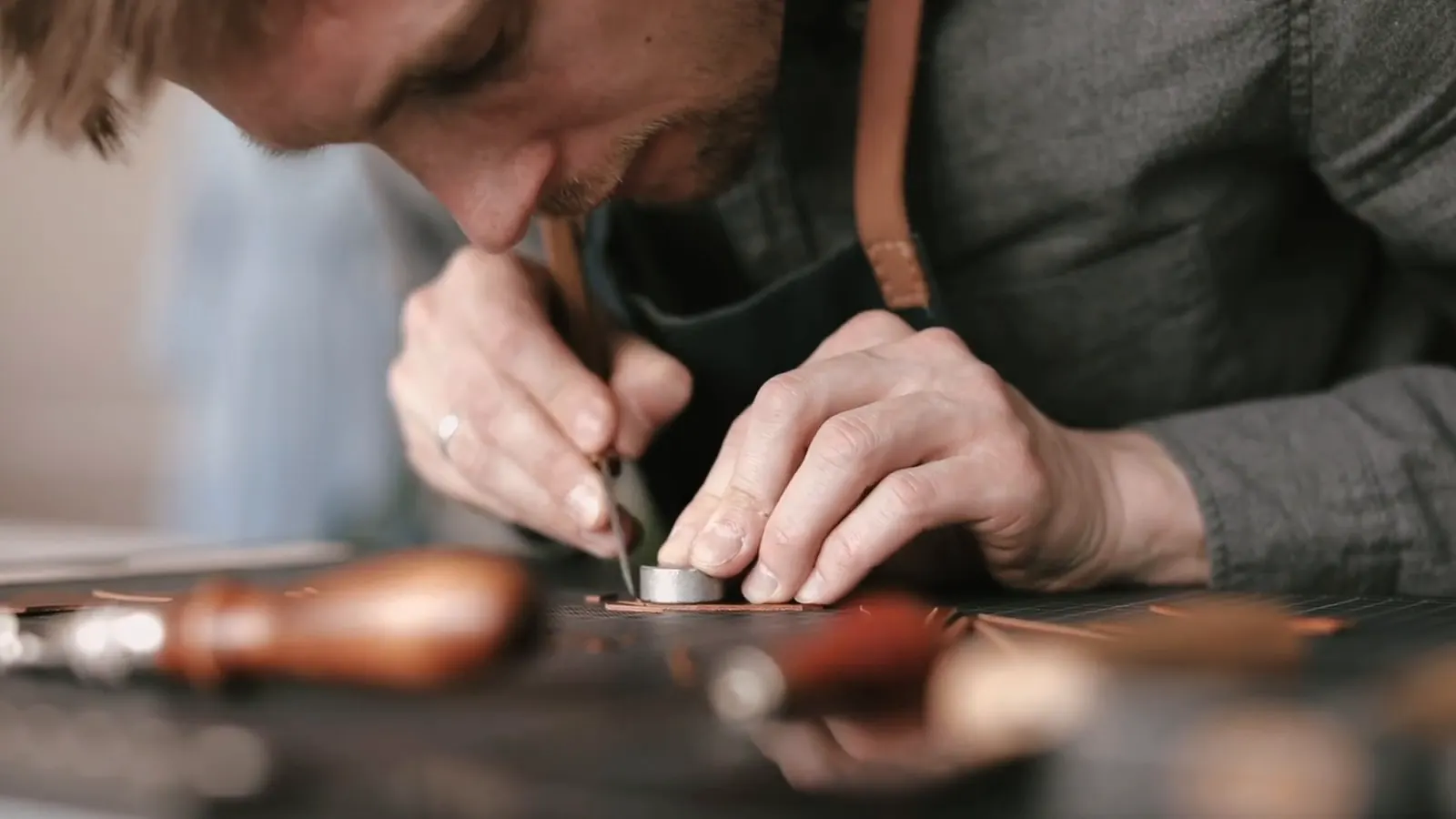
The edge is hard
Burnished until it is glassy rather than left raw. Run a thumbnail along it: a finished edge is smooth in both directions.
Twenty years, and it gets better for the first five.
Bridle leather is stuffed with tallow when it is made, and wearing it is what works the tallow through. A new belt is the worst that belt will ever look.
- Week 1
Stiff and pale
It will feel like a plank and the colour will be flat. This is correct and it is not a fault.
- Month 6
It takes your shape
The bend sets where you wear it and the grain darkens where your hand goes. The stitching beds down and stops looking new.
- Year 5
As good as it gets
Even colour, a deep shine on the edges, and the buckle has worn a hollow it now sits in. Nothing needs doing.
- Year 12
Back for a re-wax
Half an hour of our time. It comes back looking like year five again and the stitching is checked while it is here.
- Year 20
New billet, same belt
The tongue eventually wears through at the hole you use most. We cut and stitch a new one on and the rest carries on.
What things cost.
- A belt, any length up to 44 inches£145
- A dog lead, four feet£120
- A bag strap, made to your measurement£165
- Solid brass buckle, any of fourIncluded
- Initials stamped blind at one end£12
- Restitch, re-edge and re-wax, everPostage only
- A new billet on an old belt£30
Order a strap.
Tell us what it is for and the length you want, measured from the buckle bar to the hole you actually use. If you are not sure, say so and we will tell you how to measure a belt you already own.