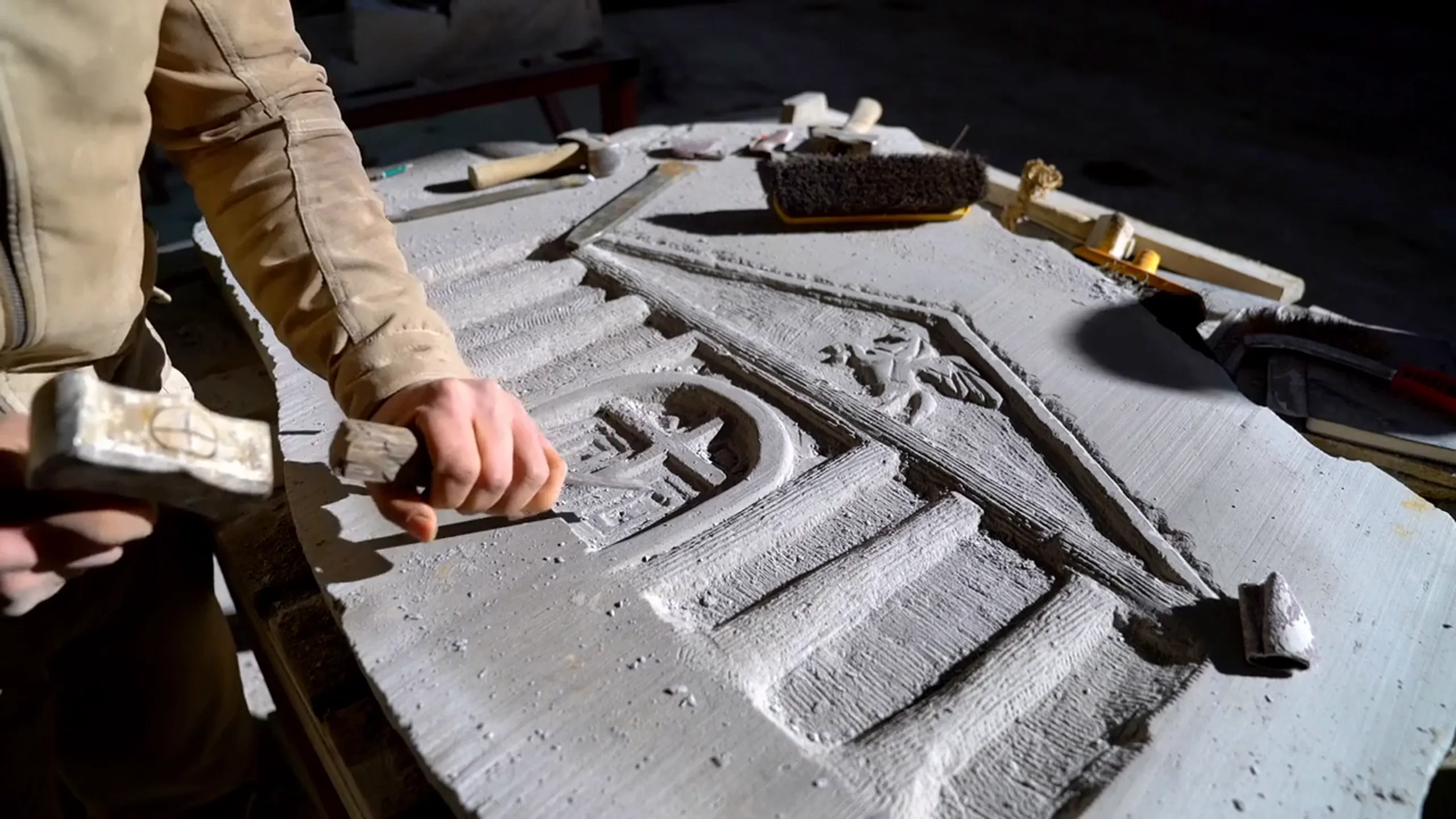
Cut by hand.
Headstones, lintels, cills and house names, drawn out full size and cut with a mallet and chisel.
Ask about a stoneEvery letter is drawn first.
Nothing is set from a font and sent to a machine. The inscription is drawn out at full size, traced onto the stone and then cut, which is why the letters sit differently on a curved top than they would on a flat one.
- Drawn full size on paper
- Traced, then cut with a mallet
- Painted, gilded, or left bare
The stone decides the letter.
Slate takes a fine serif and holds it for centuries. Limestone is softer and wants a heavier letter that will not weather away in forty years. We will tell you which one your inscription wants.
50 mmthe smallest letter worth cutting by hand
A churchyard has rules.
Most parishes and cemeteries set a maximum size, a list of permitted stones and often a rule about gilding. We check the regulations before quoting and submit the application for you.
Faculty applications usually take six to ten weeks
Ask about a stoneWhat you are actually paying for.
A cut letter is not a printed one. Every part of it is a decision somebody made with a chisel, and all of them are why it will still be readable when the stone has weathered back.
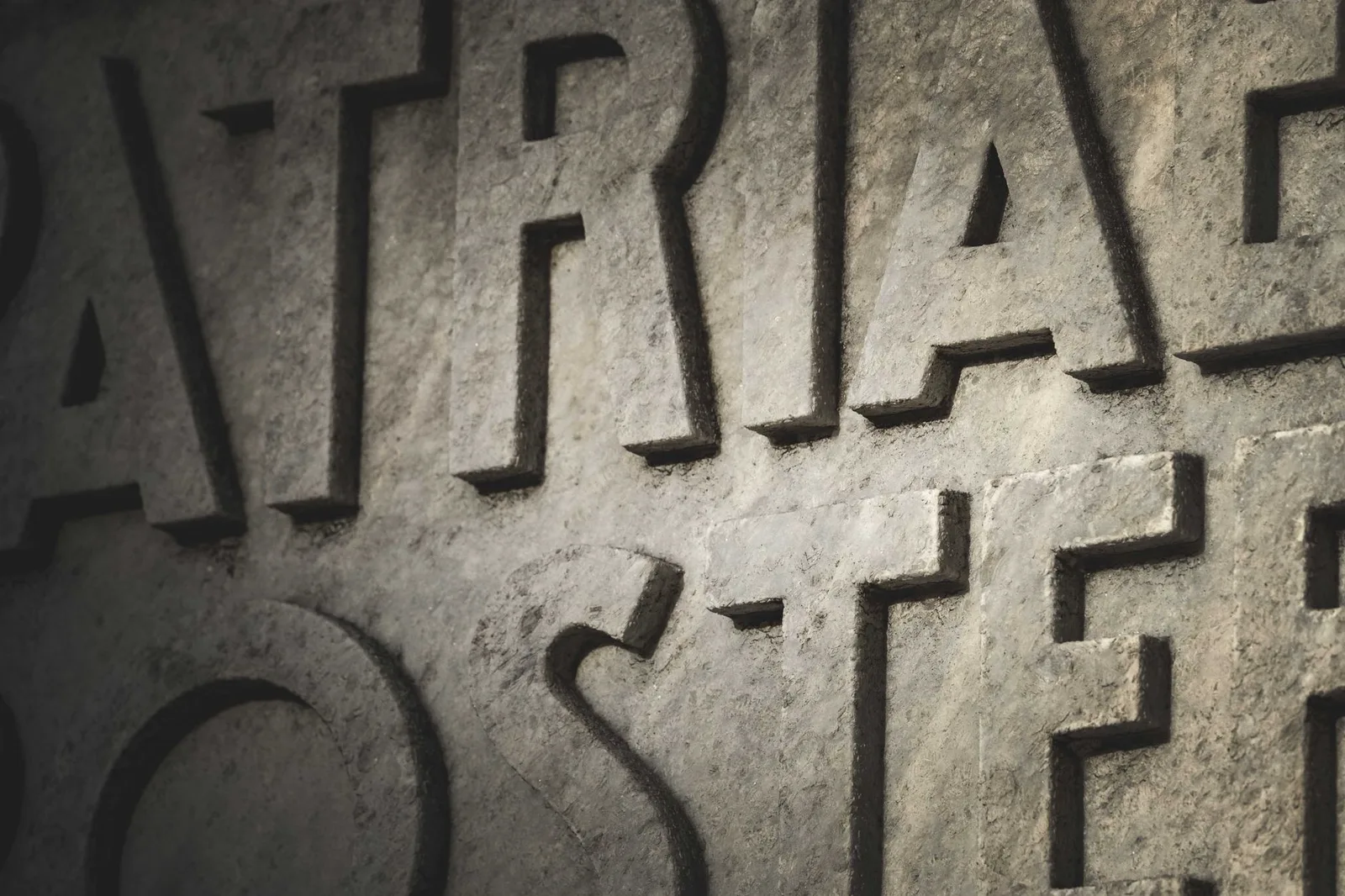
- 01The V cut
- 02The serif
- 03The word space
- 04The weathering
Twenty six weeks, and most of it is waiting.
The cutting is the quick part. A new grave has to settle for six months at least before anything can be fixed on it, so the weeks below start from the day the ground is ready.
- Week 1
The first conversation
Usually on the telephone. We ask what is already in the churchyard, and what the family wants it to say.
- Week 3
A drawing
The whole inscription drawn out at size, so you are looking at the letters themselves rather than a font on a screen.
- Week 6
The application
The drawing goes to the parish or the cemetery office, and then we wait for it to come back approved.
- Week 20
On the banker
Two to three weeks of cutting for a standard inscription. Longer in granite, and longer again if the stone is being shaped.
- Week 26
Fixing
Set on a concrete foundation to the churchyard's own specification, and the ground around it made good.
What a stone actually weighs.
A stone is going to be read by people who are not born yet. That is the whole reason to cut it slowly.
Ask about a stone.
Tell us where it is going, whether it is a new stone or an addition to one already there, and roughly what it needs to say. We reply with a drawing fee, a price range and the next date on the banker.