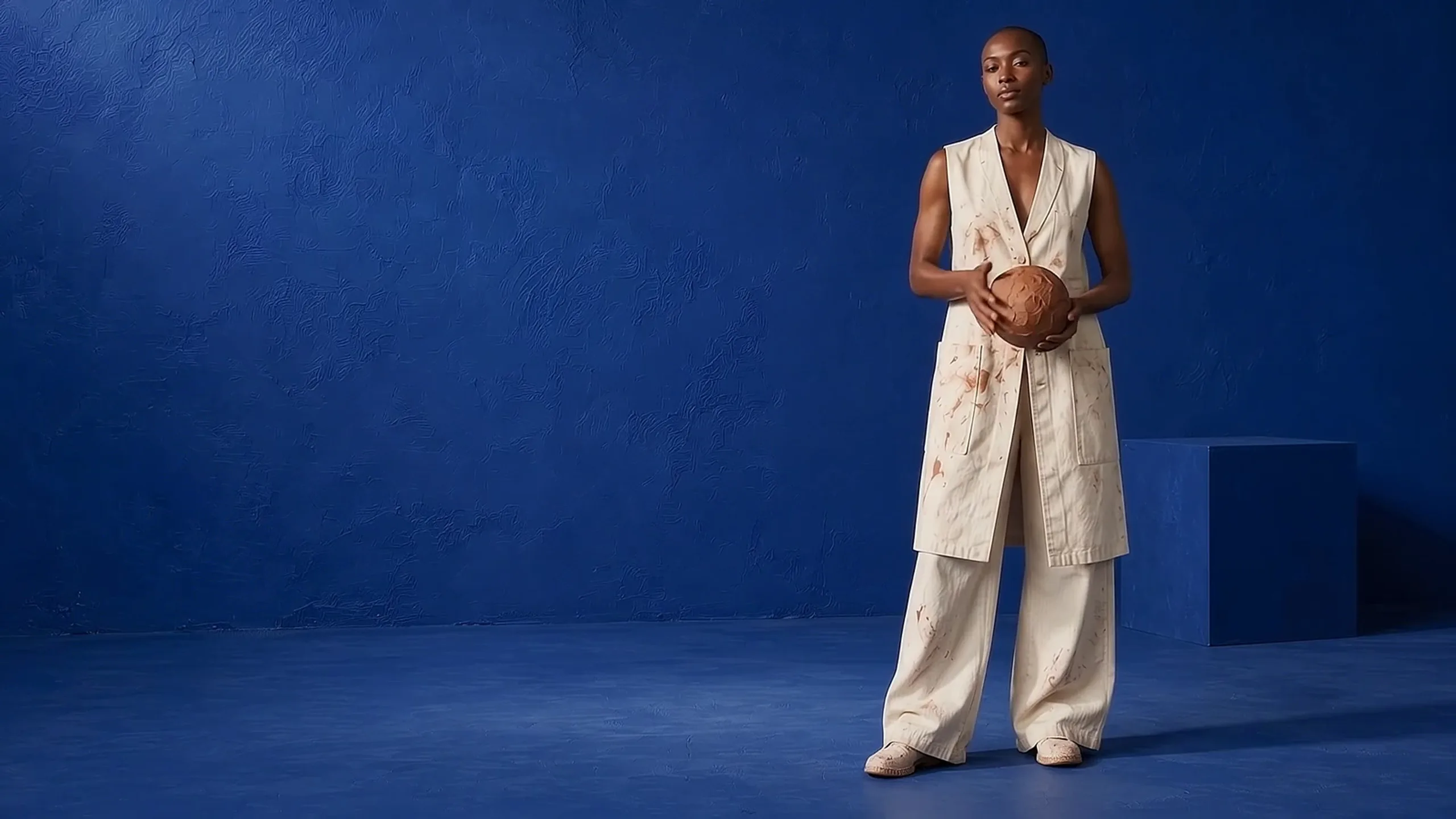
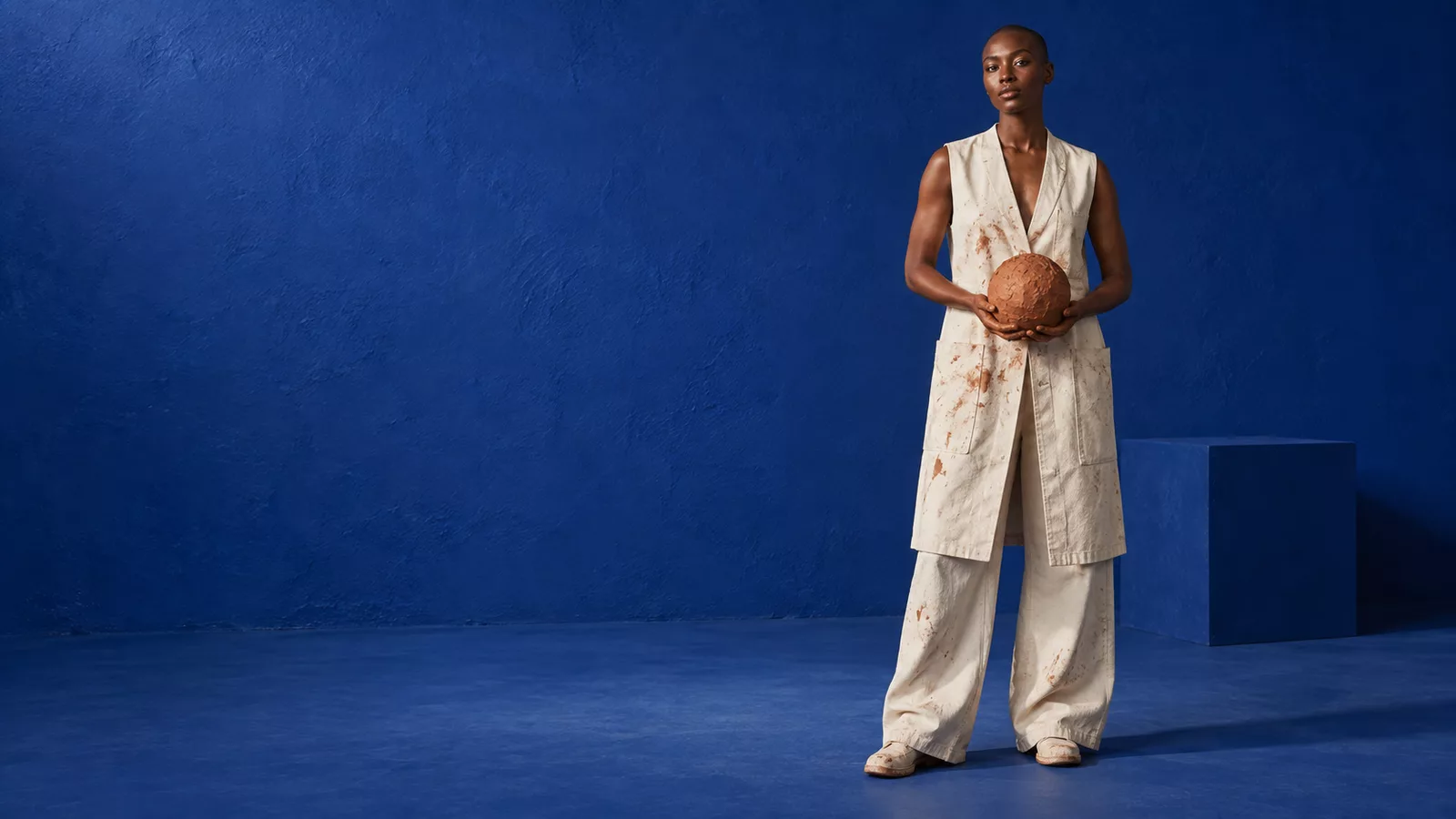
One lump of clay.
Hand built vessels raised from a single mass of terracotta, glazed once and fired once, in a studio behind the harbour at Margate.
See the collectionNo wheel. Coils.
The clay is rolled into a rope and wound upward a course at a time, then pinched and scraped back until the wall runs even. A wheel would be quicker and every pot would come out round.
- Rolled by hand into coils
- Wound, pinched, scraped back
- Left a week to leather hard
The mass never changes.
Whatever the pot becomes, it is the same clay it started as. Nothing is added and nothing is thrown away, which is why the walls thin as the piece grows taller.
2.4 kgthe clay in a standard vessel, wet
The glaze is thrown.
Not dipped, not sprayed, not brushed on with a hake. A bucket of cobalt slip is thrown at the pot in one movement, and where it lands is where it stays.
You get one attempt.
A thrown glaze cannot be tidied up. Wipe it back and the clay has already taken the colour, so a piece either works as it landed or it goes on the shelf as a second.
Seconds are sold from the studio door and never listed
Then it goes in cold.
Twelve hours climbing to temperature, an hour held at the top, and two days coming back down slowly enough that nothing crazes. The kiln is opened on the third morning.
1,260°Cthe top of the glaze firing
See the collectionForty pieces a year, and no two of them match.
Everything is one off. What is on the shelf at any moment is what came out of the last firing, so the collection is small and it changes about every six weeks.
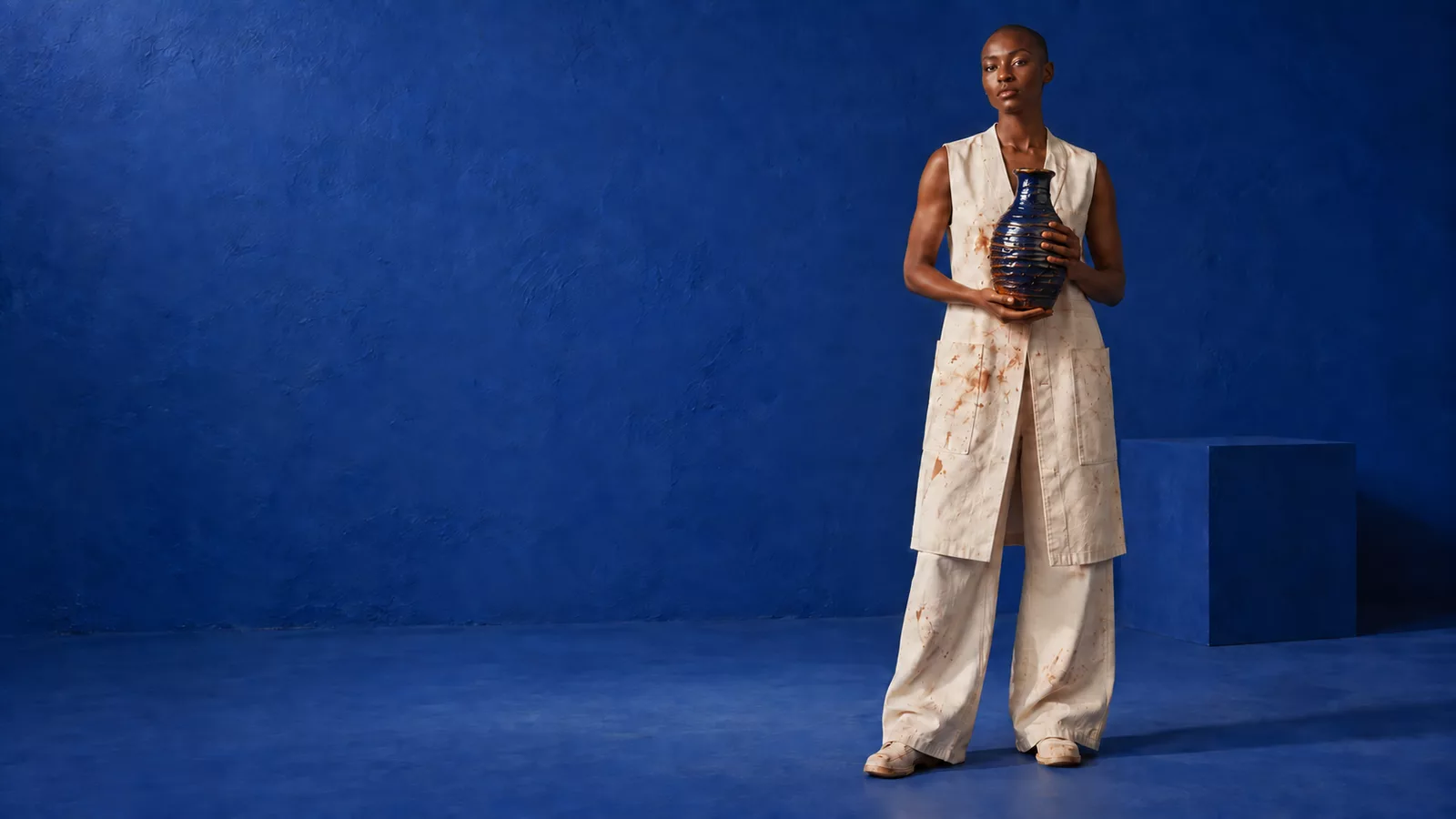
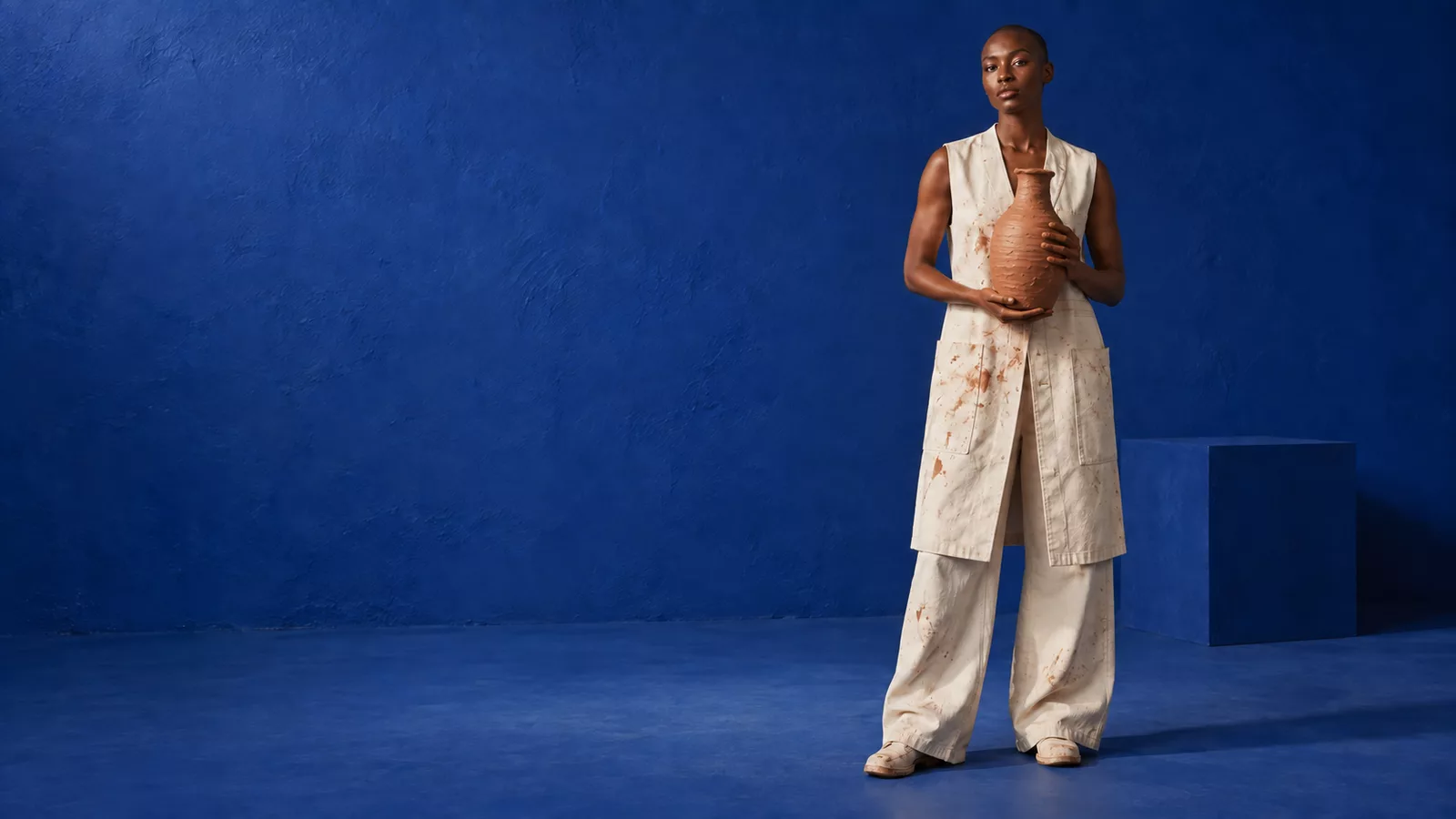
Nothing is editioned
There is no run of six. A shape is built once, glazed once and then she builds a different one.
Four glazes, mixed in the studio.
All four are mixed from dry oxide rather than bought ready made, so a batch shifts a little each time and the colour is dated on the base of the pot.
What the kiln takes back.
None of this is negotiable and all of it is why a piece costs what it does.
People write and ask for the blue one they saw. There is no blue one. Every pot took the glaze differently, and that is the entire point of throwing it.
Ask about a piece.
Tell us which piece you are looking at, or what you have in mind for a commission and roughly when you need it. We reply with what is on the shelf, what is in the kiln and what a commission would cost.